
Squid Game (오징어 게임): The Show That Shocked the World
How a Korean drama about debt, desperation, and children's games became the most watched series in Netflix history.
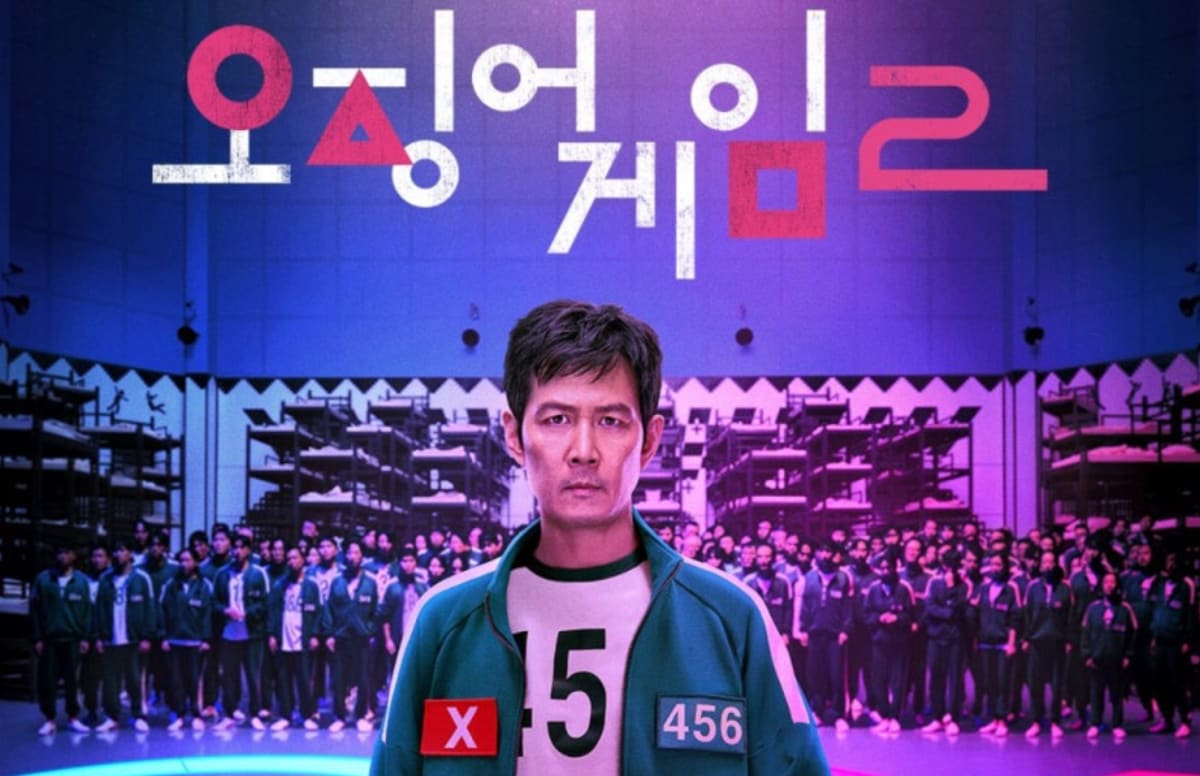
On September 17, 2021, Squid Game premiered on Netflix. By October 12, 2021 — twenty-five days later — it had become the most watched series in the platform's history, with 142 million households viewing in its first month. No K-Drama had ever done anything remotely like it. No non-English language drama had. And the question everyone asked — why this, why now — has more than one answer, and none of them are simple.
The Story
Seong Gi-hun (Lee Jung-jae) is a middle-aged Korean man in severe debt — his own bad decisions compounded by economic circumstances he didn't create. Divorced, estranged from his daughter, dependent on his elderly mother, recruited into casual crime for the money. He accepts an invitation from a man in a subway station to play a children's game for cash.
The game is real. The cash is real. And the consequence of losing is death.
456 people — all of them in desperate financial circumstances — are brought to a remote island facility where they compete in six Korean children's games. The winner receives ₩45.6 billion won (approximately $38 million USD). Everyone else dies.
What the show does with this premise is not primarily thriller — though it's thrilling — and not primarily horror — though it's horrible. It's primarily a study of what economic desperation does to people, and what a society produces when it generates enough of it.
The Cast
Actor | Character | Note |
|---|---|---|
Lee Jung-jae | Seong Gi-hun | The protagonist; an ordinary man in impossible circumstances |
Park Hae-soo | Cho Sang-woo | Gi-hun's childhood friend; Seoul National University graduate; the moral counterpart |
HoYeon (Jung Ho-yeon) | Kang Sae-byeok | A North Korean defector trying to bring her family south |
Oh Young-soo | Oh Il-nam | An elderly man; one of the show's key mysteries |
Wi Ha-jun | Hwang Jun-ho | A police detective who infiltrates the facility |
Lee Byung-hun | The Front Man | The facility's overseer |
HoYeon was a model who had never acted before Squid Game. Her performance as Sae-byeok became the drama's most internationally praised, and her post-drama career — fashion campaigns, acting projects, cultural presence — was transformed overnight. She became one of the most recognized Korean faces globally.
The Games
The children's games that structure Squid Game are real Korean games that most Korean viewers of a certain generation played in childhood:
무궁화 꽃이 피었습니다 (Red Light, Green Light) — a game where players freeze when the doll turns around; those who move are eliminated. The doll in the drama became one of global popular culture's most recognizable images of 2021.
달고나 (Dalgona / Ppopgi) — cutting a shape from honeycomb candy without breaking it. The scene sparked a worldwide dalgona challenge on social media.
줄다리기 (Tug of War) — team elimination.
구슬치기 (Marbles) — played in pairs, with each pair's losing member eliminated.
유리 징검다리 (Glass Bridge) — crossing a bridge of tempered and regular glass panels.
오징어 게임 (Squid Game) — the show's titular game; a traditional Korean children's game played on a squid-shaped court.
The choice of children's games is the show's central metaphor: the games are things you played before the world was cruel, and they're being used to kill people who are desperate enough to participate in them. The nostalgia is weaponized.
Tip — The games are real: If you watch Squid Game and feel that the children's game premise is invented, it isn't. 무궁화 꽃이 피었습니다, 달고나, 구슬치기, and 오징어 게임 are or were common Korean children's games. Korean viewers in their thirties and older recognized them immediately. The show uses that recognition — the games mean something different when they're lethal.
What the Show Is Really About
Creator Hwang Dong-hyuk began developing Squid Game in 2009 — during the aftermath of the global financial crisis — as a response to his own economic circumstances at the time (he sold his laptop and his mother's insurance policy to survive). He couldn't find production backing for over a decade. Netflix, which doesn't operate on the same commercial calculus as Korean broadcast networks, said yes.
The show's actual subject is economic desperation and the systems that produce it. Every player in the game is there for a specific reason: debt from failed businesses, gambling, or circumstances outside their control. The game's premise — equal conditions, everyone starts the same — is presented as a feature by the organizers and criticized as false by the show: people don't start equal; they arrive carrying different resources, different bodies, different knowledge.
The class analysis is not subtle. The game's billionaire organizers watching from above while desperate people kill each other is not an ambiguous image. But the show earns the right to be unsubtle because it's earned your investment in the people below.
Why It Became Global
The premise transcends language. The games require no cultural knowledge to understand the stakes. A person who has never heard of Korean children's games understands within two minutes what survival means in Squid Game. This accessibility — unusual for a Korean drama — allowed it to spread across language barriers more easily than most.
The economic anxiety is universal. Squid Game depicts Korean debt culture specifically, but the experience of economic desperation — of being behind in a system that won't let you catch up — was recognizable globally in 2021, after the pandemic had intensified economic inequality nearly everywhere.
Netflix's simultaneous global release. Squid Game was released globally on the same day. Every country could watch it simultaneously, which allowed the word-of-mouth to scale globally rather than sequentially. This was a structural advantage the show's predecessors didn't have.
The visual language was new. The pink-jumpsuited guards, the geometric mask-wearing VIPs, the specific color palette of the facility — these images were genuinely new to global visual culture and spread immediately.
Season 2
Squid Game Season 2 aired in December 2024, with a third season confirmed for 2025. Season 2 continues Gi-hun's story — he chose not to fly to see his daughter and came back to find the game. The reception was more divided than Season 1: the consensus was that it sets up Season 3 more than it functions as a standalone narrative.
Season 1 is complete as a story, and remains the more fully realized work.
Key Facts
Network | Netflix |
Year | 2021 |
Episodes | 9 (S1), 7 (S2) |
Where to watch | Netflix |
Creator / Director / Writer | Hwang Dong-hyuk |
Netflix record | Most watched series in Netflix history at time of release |
Explore more K-Drama: How to Find Your K-Drama: A Complete Genre Guide →
Comments
Inappropriate comments may be deleted.
Log in to leave a comment.
No comments yet. Be the first!