
My Mister (나의 아저씨): The Quiet Masterpiece
The K-Drama that doesn't give you what you want — and gives you something you didn't know you needed.
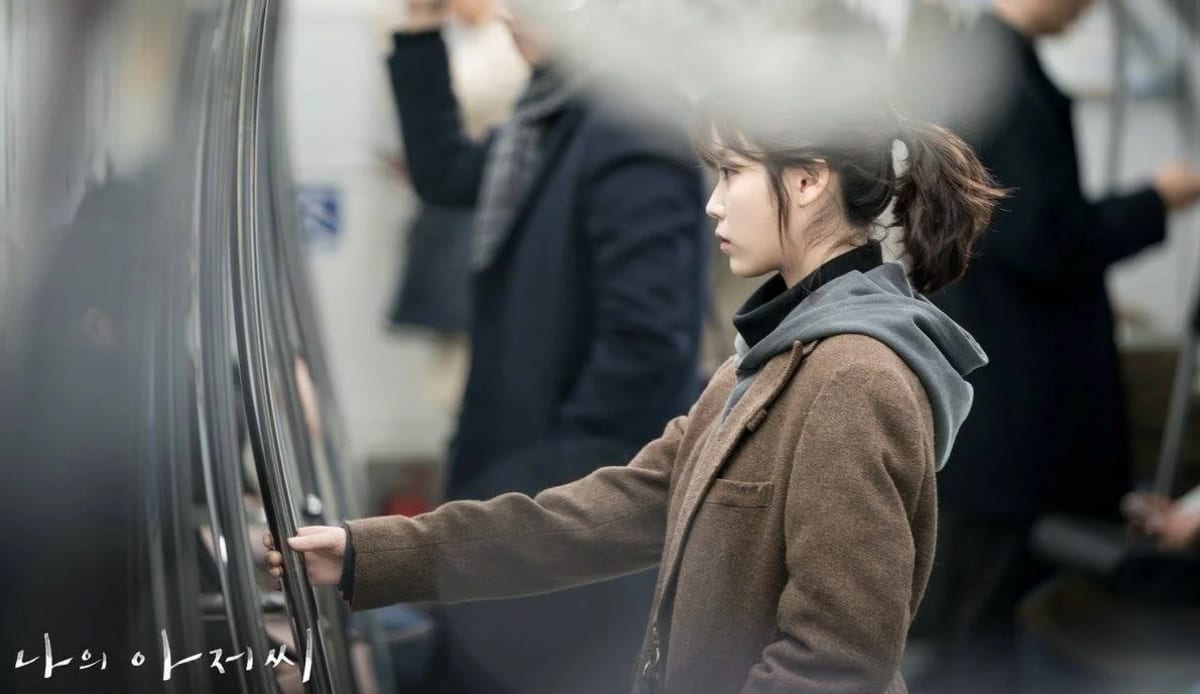
My Mister is the K-Drama most frequently cited by people who watch a lot of K-Drama as their favourite. It's also the drama most likely to be abandoned in the first two episodes by people who expected something else. It's slow. It's heavy. It doesn't deploy the genre conventions that make K-Drama immediately accessible. What it does, across sixteen episodes, is something that most television — Korean or otherwise — doesn't attempt: an honest portrait of ordinary people in ordinary suffering, and what happens when two people from completely different circumstances recognise something true in each other.
The Story
Park Dong-hoon (Lee Sun-kyun) is a 40-something structural engineer in Seoul. His career has stalled. His marriage is failing — his wife is having an affair with his boss. His two brothers are similarly stranded: one a failed director, one a struggling bar owner. They are close, and their closeness is one of the few warm things in his life. He is not happy, but he's not dramatic about it. He has simply arrived at a place where things are not what he expected, and he doesn't know what to do.
Lee Ji-an (IU) is a contract worker at the same company. She's in her twenties. She has significant debt — her grandmother's medical bills — and she does whatever is necessary to manage it, including collecting illegal income from a loan shark's network. She trusts no one. She expects nothing. She has been surviving for so long that she's forgotten what not surviving would look like.
They start as adversaries. Someone puts Ji-an in a position of gathering information about Dong-hoon. She begins to listen to his phone calls, to follow the contours of his life. Something changes.
What the Drama Is
My Mister is not a romance in the conventional K-Drama sense. The relationship between Dong-hoon and Ji-an is not romantic in its surface expression — they don't confess feelings, they don't pursue each other, they don't resolve into a couple. What they have is something that Korean has a better word for than English: 정 (jeong) — the deep mutual attachment that comes from witnessing someone's life, from being seen by someone who usually doesn't see you, from being taken seriously by someone who has no particular reason to.
The drama is about two people who are each, in their own way, invisible — to their colleagues, to their families, to themselves — finding each other. It's about what it means to be witnessed. It doesn't require them to become romantically involved to be devastating.
The Cast
Actor | Character | Note |
|---|---|---|
Lee Sun-kyun | Park Dong-hoon | An actor of extraordinary quietness and restraint |
IU (Lee Ji-eun) | Lee Ji-an | Her finest acting performance; the role that reframed her public identity |
Oh Dal-su | Park Sang-hoon | Dong-hoon's eldest brother; the warmth of the drama's heart |
Park Ho-san | Park Ki-hoon | Dong-hoon's youngest brother |
Park Hae-joon | Do Joon-young | Ji-an's boss and Dong-hoon's wife's affair partner |
IU's performance is the drama's most discussed achievement — and the most significant departure from her established public image. She plays Ji-an with almost total emotional containment: a person who has learned that showing feeling is dangerous, expressing need is weakness, and hope is something you don't let yourself have. The breakthrough moments when that containment cracks are genuinely extraordinary.
Lee Sun-kyun brings a quality that's harder to name: a man who is not performing suffering, who is not dramatizing his difficulties, who is just living in them. The restraint is the performance.
Tip — Ji-an's earpiece: A recurring device throughout the drama is Ji-an listening to Dong-hoon's life through a wiretap — hearing his conversations with his brothers, his evenings, his ordinary moments. The ethical complexity of this device is intentional: her listening is both an invasion and, gradually, a form of love. The drama doesn't resolve this tension. It sits with it.
The Three Brothers
One of My Mister's greatest achievements is the Park brothers' friendship — the three men who grew up together and still gather regularly, who know each other completely, who are simultaneously proud of each other and grieving the futures they didn't have.
The brothers' friendship functions as the drama's emotional refuge: when Dong-hoon needs not to be the person his office or his marriage requires him to be, he goes to his brothers. Their neighbourhood bar becomes a kind of sanctuary. The three actors together produce something rare in Korean drama — a convincing portrayal of adult male friendship, with its specific warmth, its specific silences, and its specific grief.
Why It's Difficult
My Mister is not an easy watch, and it's worth being honest about why:
The pace is slow. The drama doesn't accelerate. It sits with its characters in their ordinary time. Some scenes are long. Some silences are extended. If you're waiting for something to happen, the wait will feel long.
The emotional register is low. There are no dramatic confrontations, no high-volume expressions of feeling. Characters cry sometimes, but not often. The drama conveys emotional intensity through restraint — through what isn't said, what isn't done.
The first two episodes are the most difficult. The drama establishes its world and its characters with patience. The relationship between Dong-hoon and Ji-an doesn't become legible until episode three or four. Most viewers who abandon the drama do so before then.
The payoff is real. By episodes twelve and fourteen, the accumulated emotional investment has built to a point where the drama delivers what it's been building toward — not a dramatic climax, but a clarity. A moment where what these two people mean to each other is finally named.
The World Around the Characters
My Mister depicts a specific sector of Korean society — the working middle class of Seoul — with documentary accuracy. The company hierarchy, the 야근 (overtime) culture, the specific social dynamics of a structural engineering firm, the neighbourhood community life around Dong-hoon's brothers' bar, the specific poverty of Ji-an's circumstances — these are depicted without romanticism or condescension.
The neighbourhood in which the brothers grew up is portrayed with particular care: the community bulletin board, the elderly residents, the social infrastructure of a Korean neighbourhood that hasn't been gentrified. It's a portrait of something that is disappearing in Seoul, and the drama is aware of this.
Key Facts
Network | tvN |
Year | 2018 |
Episodes | 16 |
Where to watch | Netflix |
Writer | Park Hae-young |
Director | Kim Won-seok |
Next up: Extraordinary Attorney Woo (이상한 변호사 우영우): The Guide →
Comments
Inappropriate comments may be deleted.
Log in to leave a comment.
No comments yet. Be the first!