
IU (아이유): Korea's Nation's Artist
The singer-songwriter who became the most beloved Korean pop artist of her generation — without the idol system's playbook.
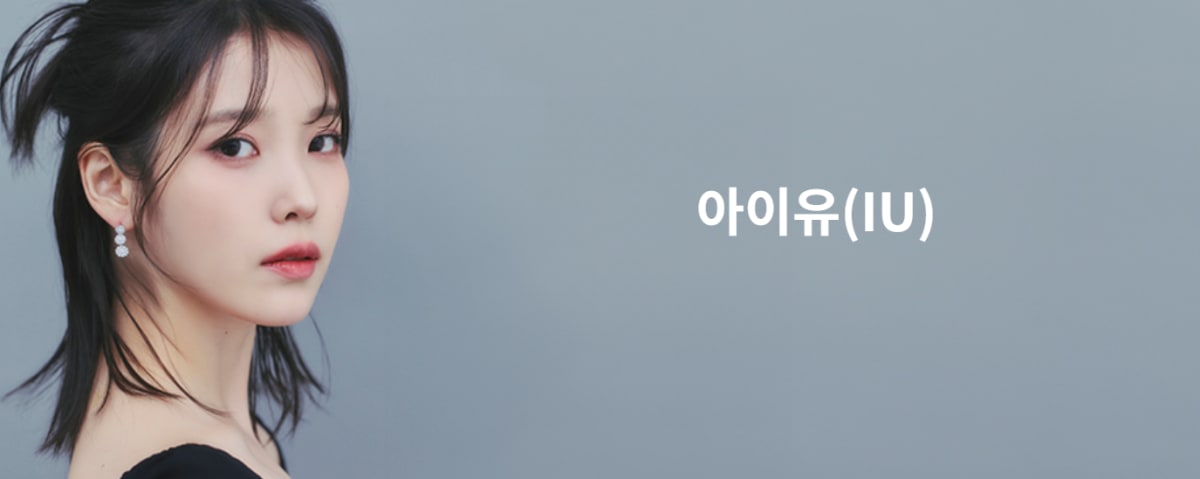
IU didn't come from a Big Three agency. She wasn't part of a group. She debuted at 15 from LOEN Entertainment (now Kakao M) in 2008 and spent her first few years struggling — the label was small, the initial releases underperformed, and the path to visibility wasn't clear. What happened next was not a manufactured breakthrough. It was a talent, writing her own songs, gradually accumulating a following that became one of the most loyal in Korean popular music. Twenty million Melon followers. Sold-out stadiums. A cultural status in Korea that has no real Western equivalent — something between a pop star, a national treasure, and a trusted friend.
Who IU Is
IU 아이유 (Lee Ji-eun, 이지은) was born in 1993 in Seoul. She auditioned for multiple agencies before being accepted by LOEN Entertainment. She debuted in September 2008 with the EP Lost and Found — at 15, with minimal fanfare.
Her early career was defined by a warmth and accessibility that distinguished her from the polished idol mainstream: she wrote or co-wrote much of her material, her lyrics were personal and specific, and her vocal style — clear, precise, emotionally direct — was immediately recognizable.
The Breakthrough
"Good Day" (2010) is the track that made IU a star. The three-whistle notes at the end — hitting high C, D, and E in rapid succession — became one of Korean pop music's most celebrated vocal moments. The song's bright energy and IU's vocal acrobatics turned a moderately popular singer into a household name overnight.
From 2010 on, IU had a consistent presence on the Gaon chart that was unusual for a solo female artist in a landscape dominated by idol groups. She wasn't topping charts every single week, but she was never absent — album cycle after album cycle, she maintained commercial relevance while her peers cycled in and out.
The Artist, Not Just the Idol
What separates IU's career trajectory from most K-Pop acts is the creative ownership. A significant portion of IU's discography is self-written or co-written. Her albums are cohesive artistic statements, not collections of producer-assigned tracks:
Palette (2017) — a conceptual album about turning 25, produced with collaborators including G-Dragon (Big Bang) and Zico. Critical and commercial peak; "Palette" and "through the night (밤편지)" remain two of the most-streamed Korean songs ever.
LILAC (2021) — a farewell to her twenties, deliberately nostalgic and intimate. The title track and "Celebrity" were chart-dominant.
The Winning (2024) — continued the pattern; IU now clearly operating as a senior figure in Korean pop, with the freedom that position grants.
Tip — "밤편지 (through the night)": If you're new to IU, start here. The track is considered by many Korean music listeners to be one of the most perfect Korean pop songs ever made — the production (piano, strings, restraint), the lyric (a letter to a sleeping loved one), and the vocal delivery are all extraordinary. It's also a direct representation of what IU sounds like at her best: intimate, specific, and emotionally devastating in the quietest possible way.
The Drama Career
IU has built a parallel acting career that would be notable independently of her music:
Dream High (2011) — early role; romantic drama about aspiring idols
Producer (2015) — romcom with IU, Kim Soo-hyun, and Cha Tae-hyun
My Mister (나의 아저씨) (2018) — IU's most acclaimed acting performance; she plays a young woman with a difficult past who forms an unlikely connection with a middle-aged man. The show is considered one of Korean television's finest, and IU's performance is central to its success. It changed how the industry and public perceived her acting capabilities.
Hotel Del Luna (2019) — supernatural romance; her highest-rated drama; IU as the ghostly owner of a hotel for the dead
Broker (2022) — Hirokazu Kore-eda's Korean-language film, co-starring Song Kang-ho. Cannes premiere. The move into international prestige cinema.
"국민 여동생" to "국민 아티스트"
IU's public identity has evolved over her career. She was initially labeled 국민 여동생 (gukmin yeodongsaeng) — "Nation's Little Sister" — a specific Korean cultural category for a young female celebrity who projects wholesome approachability and is broadly beloved across demographics.
She has outgrown that frame while remaining broadly beloved. The adult IU — who writes about grief, loneliness, the complexity of public image, and the experience of aging into her thirties with consciousness — is a more substantial figure than the "little sister" framing accommodated. The term 국민 아티스트 (Nation's Artist) is closer to how her status is now discussed.
The UAENA Fandom
IU's official fandom name is UAENA (유애나) — derived from "U," "A," and "na" (나, meaning "I" in Korean). The name encodes the idea that the relationship between IU and her fans is one of mutual recognition — I and you.
UAENA skews older than most K-Pop fandoms and is known for a quality of devotion that doesn't depend on competitive fan activity (streaming parties, voting campaigns) as heavily as idol fandoms. The relationship is closer to a traditional music fandom — love of the work, sustained over years.
Controversies and Responses
IU has navigated several public controversies — sampling disputes (a 2013 controversy over an uncredited influence in "Crayon"; later resolved), a 2018 controversy over album concept references that some interpreted as problematic toward minor artists. Her responses — candid, taking responsibility where warranted, declining to over-apologize where she didn't believe an apology was due — have generally increased rather than decreased public trust in her.
Why IU Matters in Korean Pop
IU's significance is partly musical, partly cultural. Musically: she is the most commercially successful female solo artist in Korean pop history, with a creative output that rewards close listening in a way idol group discographies often don't.
Culturally: she represents a path in Korean pop that the idol system doesn't typically produce — a solo artist with genuine creative ownership, longevity built on quality rather than novelty, and a public image that has grown and matured in front of an audience that grew up with her.
In the conversation about what Korean pop is capable of — whether it's a production system or whether it can produce artists in the fullest sense — IU is the case study for the latter.
Key Discography
Release | Year | Why it matters |
|---|---|---|
Last Fantasy | 2011 | "Good Day"; commercial breakthrough |
Modern Times | 2013 | Artistic maturity; retro influences |
Palette | 2017 | Critical and commercial peak; "밤편지," "Palette" |
LILAC | 2021 | Farewell to her twenties; "Celebrity," "LILAC" |
The Winning | 2024 | Senior-artist era; continued excellence |
Comments
Inappropriate comments may be deleted.
Log in to leave a comment.
No comments yet. Be the first!