
BTS (방탄소년단): From Seven Boys to a Global Phenomenon
The story of how a small Korean agency's debut group became the most influential act in the history of K-Pop.
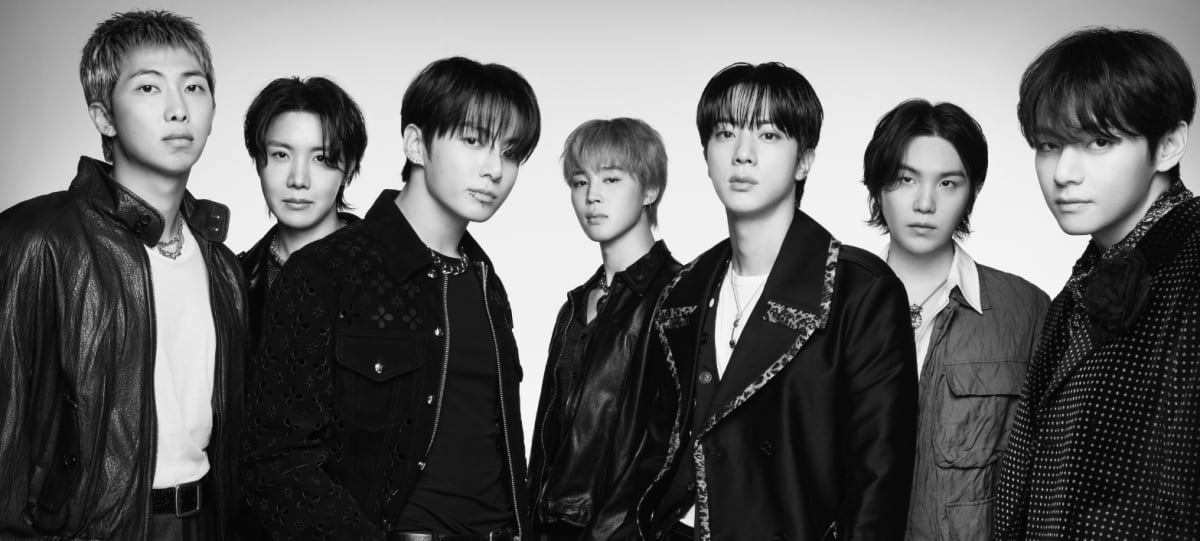
In 2013, BTS debuted from Big Hit Entertainment — a mid-sized agency with limited resources, no proven track record with idol groups, and a roster of exactly one act. In 2020, they became the first Korean artists to top the Billboard Hot 100. In 2021, they addressed the United Nations General Assembly. In 2022, each member began enlisting in the Korean military. None of it was inevitable. All of it was built, one year at a time.
BTS means Beyond the Scene. The Korean name of this group is originallay 방탄소년단(bang-tan-so-nyeon-dan) which means Bulletproof Boy Scouts.
The Members
Name | Role(s) | From |
|---|---|---|
RM | Leader, rapper | Ilsan, South Korea |
Jin 진 | Vocalist | Gwacheon, South Korea |
Suga 슈가 | Rapper, producer (also solo as Agust D) | Daegu, South Korea |
J-Hope 제이홉 | Rapper, dancer (also solo) | Gwangju, South Korea |
Jimin 지민 | Vocalist, dancer | Busan, South Korea |
V 뷔 | Vocalist (also solo as V) | Daegu, South Korea |
Jungkook 정국 | Main vocalist, "Golden Maknae" | Busan, South Korea |
The Early Years (2013–2015)
BTS debuted on June 13, 2013, with the single "No More Dream" — a track about educational pressure on Korean youth, with a hip-hop sound that was notably different from the polished pop of the major agencies. Big Hit positioned them as a hip-hop group with socially conscious themes, which distinguished them from the more conventionally idol-styled acts of the time.
The early period was genuinely difficult. Big Hit had limited budget; the members have spoken openly about financial uncertainty and pressure in this period. But the group was building something specific: a direct, intimate relationship with a small but intensely loyal fanbase through frequent social media content, behind-the-scenes access, and personal candor that wasn't standard practice for K-Pop groups.
ARMY — the official fandom name, adopted in 2013 — became the foundation. The name was deliberately chosen for its military resonance with BTS (Bulletproof Boy Scouts — the original meaning of 방탄소년단); the logic being that "bulletproof boys" are protected by their army.
The Breakthrough (2015–2018)
The HYYH (Hwa Yang Yeon Hwa / Most Beautiful Moment in Life) series — beginning with The Most Beautiful Moment in Life Pt.1 in 2015 — marked the first significant artistic evolution. The music, still rooted in hip-hop, started incorporating more sophisticated production and emotional depth. The accompanying short films introduced a narrative universe (BTS Universe) that wove fictional stories through the music, giving fans content to analyze and discuss beyond the songs themselves.
"Blood Sweat & Tears" (2016) and Wings introduced a more sophisticated aesthetic — darker, more literary (the album referenced Hermann Hesse's Demian), visually striking. Critical attention followed.
By 2017, BTS was winning at the Billboard Music Awards — beating Justin Bieber for Top Social Artist, the first K-Pop act to win a BBMA. American media treated it as a curiosity. It was the beginning of something they didn't yet understand.
Tip — The BTS Universe (BU): The fictional narrative woven through BTS music videos, short films, and webtoons is one of the most elaborate fan engagement projects in K-Pop. It's entirely optional — you can enjoy BTS without following the lore — but for fans who go deep, it functions as a participatory storytelling experience. The HYYH narrative, the Save Me webtoon, and the "MAP OF THE SOUL" series are the main threads.
The Global Moment (2018–2021)
Love Yourself: Her (2017) and its sequels — Tear and Answer — launched BTS to a genuinely different level. FAKE LOVE charted in the Billboard Hot 100. IDOL debuted at #11. The Love Yourself world tour was BTS's first stadium series.
"Dynamite" (August 2020) — their first fully English-language single, released during the COVID pandemic — debuted at #1 on the Billboard Hot 100. It was the first time a Korean act had achieved that. It was not a fluke: "Butter" and "Permission to Dance" each repeated the feat.
In 2021, they addressed the UN General Assembly on youth issues and COVID recovery. The address was delivered in Korean. RM's speech — calm, direct, deeply considered — was widely watched beyond the K-Pop fanbase. It was a signal of something beyond entertainment industry achievement.
BTS and ARMY together raised funds for COVID relief, donated to Black Lives Matter, and ran multiple charitable campaigns through the One In An ARMY platform. The fandom's organized charitable capacity had become significant.
The Music
BTS's discography resists easy genre description. Across fifteen years, it spans:
Hip-hop and rap-heavy tracks (Cypher series, Suga/Agust D solo work)
Emotional ballads (Spring Day, Life Goes On)
High-energy pop (Dynamite, Butter, Boy With Luv)
Psychologically complex concept albums (MAP OF THE SOUL: Persona, MAP OF THE SOUL: 7)
Solo work across wildly different aesthetics (RM's introspective rap, Jin's vocals, J-Hope's dancehall-influenced solo career, Jungkook's global pop)
The consistent thread is personal authenticity — the group has written and produced significant portions of their own work, and their music directly addresses mental health, social pressure, self-acceptance, and the experience of youth in ways that connected with a global audience that felt underserved by those themes in mainstream pop.
Military Service and the Current Chapter
In 2022, South Korean law was amended to allow K-Pop stars to delay mandatory military service until 30 (previously 28). BTS's members chose not to take the maximum extension: Jin enlisted first in December 2022, followed by others in 2023 and 2024. Jimin and Jungkook enlisted together in December 2023. The group's active career paused for individual military service.
The expected full group reunion and return to activity is projected for 2025.
The military service chapter — handled publicly with candor about obligation and personal feeling — added another layer to BTS's relationship with their fanbase. ARMY organized extensive support projects around each enlistment.
Why BTS Matters (Beyond the Charts)
BTS changed what was considered possible in K-Pop:
Proved that a Korean-language act could top global charts without a Western label
Demonstrated that direct fan relationship, built through social media and emotional honesty, could replace traditional media gatekeeping
Established HYBE as a major entertainment conglomerate
Changed how the Korean government and industry thought about cultural export
For many fans, BTS is the entry point into K-Pop — and through K-Pop, into Korean language, culture, and history. That's an unusual thing for a pop group to be, and it's not accidental. RM's public discussion of Korean history, art, and literature has directed fan attention toward those subjects in ways that no marketing campaign could replicate.
Key Discography
Release | Year | Why it matters |
|---|---|---|
O!RUL8,2? | 2013 | Debut era; school trilogy |
The Most Beautiful Moment in Life Pt.1 | 2015 | HYYH era begins; "I Need U" |
Wings | 2016 | Artistic maturity; "Blood Sweat & Tears" |
Love Yourself: Tear | 2018 | First Billboard 200 #1 |
Map of the Soul: 7 | 2020 | Pre-pandemic peak; "Black Swan" |
Proof | 2022 | Anthology before military service |
Next up: BLACKPINK: The Story of K-Pop's Biggest Girl Group →
Comments
Inappropriate comments may be deleted.
Log in to leave a comment.
No comments yet. Be the first!