
Park Chan-wook (박찬욱): Vengeance, Beauty & the Art of Transgression
The director who made Korean cinema visually unforgettable — and morally uncomfortable.
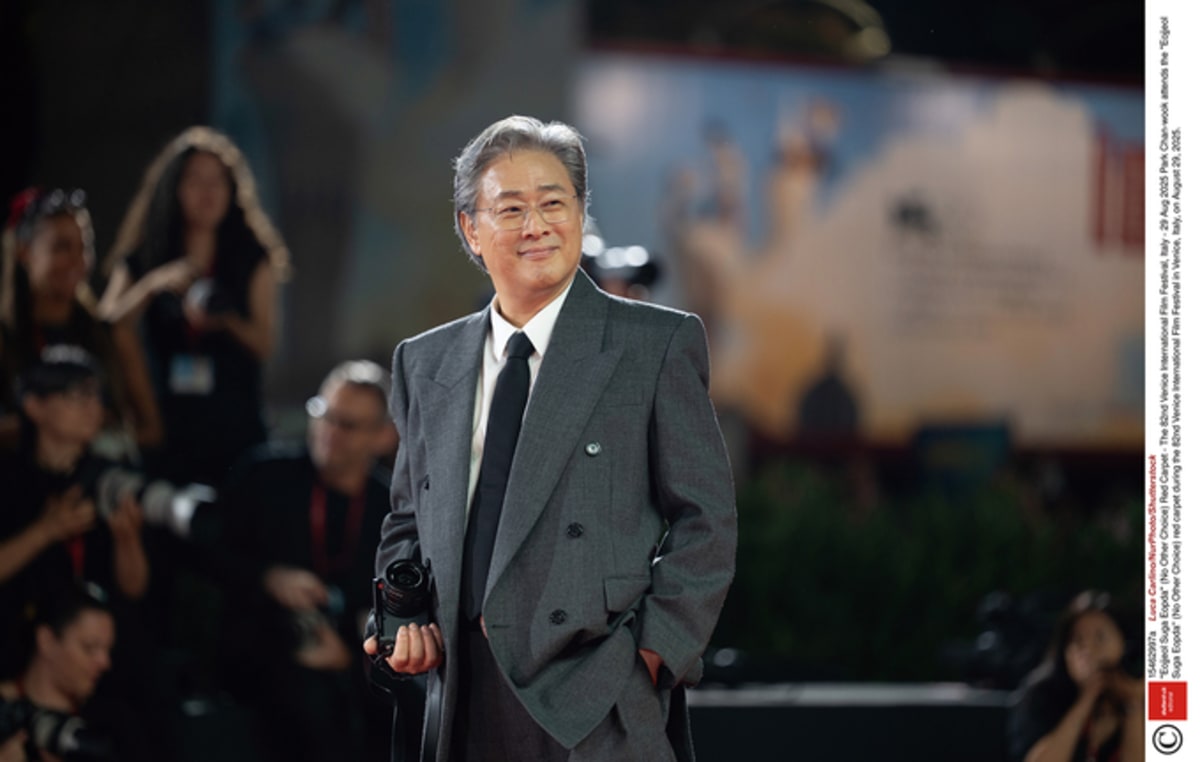
박찬욱 (Park Chan-wook) doesn't make films about nice people doing reasonable things. His films are about obsession, revenge, grief, desire, and violence — and they look extraordinary. The visual pleasure is deliberate and part of the argument: beauty can contain horror; you can be complicit in watching something terrible because it's beautiful; the seduction of a 박찬욱 film is itself a theme of the film. He is one of the most distinctive visual stylists in world cinema and one of the filmmakers who has done the most to establish Korean cinema's international reputation.
Who He Is
박찬욱 was born in 1963 in 서울 (Seoul). He studied philosophy at 서강대학교 (Sogang University) and became a film critic before becoming a director. His early work included two films he considers failures; his breakthrough came with 공동경비구역 JSA in 2000.
The philosophy background is visible in his work — particularly in the 복수 3부작 (Vengeance Trilogy), which uses the mechanics of revenge drama to interrogate whether revenge is ever what its practitioners believe it to be.
The Films
공동경비구역 JSA (Joint Security Area, 2000)
The breakthrough
A soldier is found dead in the 비무장지대 (DMZ). An investigation attempts to reconstruct what happened, revealing a secret friendship between South and North Korean soldiers. 공동경비구역 JSA was a domestic blockbuster — the highest-grossing Korean film at its release.
It's less stylistically extreme than 박찬욱's subsequent work but more emotionally straightforward — an accessible entry point that shows what he can do when he chooses not to be difficult.
복수는 나의 것 (Sympathy for Mr. Vengeance, 2002)
First in the Vengeance Trilogy
A deaf-mute factory worker tries to save money for his sister's 신장 이식 (kidney transplant) and is laid off. He and his anarchist girlfriend devise a kidnapping scheme that goes wrong. Multiple people do terrible things for understandable reasons. Everyone suffers consequences.
The first of the trilogy is the most formally austere and the most political — the 노동 착취 (labor exploitation) context is specific and deliberate.
올드보이 (Oldboy, 2003)
The work that made 박찬욱 internationally famous
A man is imprisoned in a private facility for fifteen years without explanation. He is suddenly released and given five days to find out who imprisoned him and why. 올드보이 is discussed in its own article.
What matters here about 박찬욱's direction: the corridor fight sequence (a long take of brutal, exhausted violence), the visual palette, the formal willingness to push its premise to a conclusion that many films would have retreated from. It won the Grand Prix at 칸 영화제 (Cannes).
친절한 금자씨 (Lady Vengeance, 2005)
Completing the Vengeance Trilogy
A woman is released after thirteen years in prison for a crime she didn't commit and meticulously executes a revenge plan. The most visually stylized of the three trilogy films — color as emotional indicator, formal beauty in stark contrast with the film's content. The ending, in which victims' families are offered participation in revenge, is one of Korean cinema's most disturbing sequences.
박쥐 (Thirst, 2009)
박찬욱 takes on vampires
A priest volunteers for a medical experiment and is accidentally infected with 흡혈귀 (vampirism). 박쥐 is 박찬욱 at his most playful and operatic — a vampire film that uses the genre to examine desire, guilt, and the religious need for transcendence. Won the Jury Prize at 칸 영화제.
아가씨 (The Handmaiden, 2016)
박찬욱's most acclaimed recent work
Based on Sarah Waters' Fingersmith, transposed to 1930s 일제강점기 (colonial-era) Korea: a pickpocket is hired to pose as a maid for a Japanese heiress in a scheme to steal her inheritance — and the scheme begins to change. 아가씨 is 박찬욱's most formally accomplished film — a three-act structure in which the same events are seen from multiple perspectives.
Tip — 아가씨 두 버전: The theatrical version (144 minutes) and the extended cut (168 minutes) are both widely available. The extended version adds material that deepens several relationships and is generally preferred by fans of the film. Start with the extended cut if you have the time.
헤어질 결심 (Decision to Leave, 2022)
칸 영화제 Best Director, 2022
A detective investigates a suspicious death on a mountain and becomes obsessed with the victim's wife — a Chinese immigrant who may or may not be responsible. 헤어질 결심 is 박찬욱 at his most restrained and, paradoxically, most romantic — a film built on formal elegance and emotional suffocation.
Won Best Director at 칸. Some consider it his most complete film; others miss the operatic intensity of his earlier work.
The Visual Style
Color as meaning. 친절한 금자씨 begins nearly desaturated and moves toward color as the protagonist approaches her plan's completion; the final sequence bathes everything in white.
Formal symmetry with disruptive content. 박찬욱 composes beautiful images and fills them with terrible things. The tension between formal beauty and disturbing content is deliberate — it makes the viewer complicit.
Long takes as consequence. The 올드보이 corridor fight is the canonical example: a single take of prolonged violence that refuses to glamorize what it's showing.
Women as agents, not objects. 친절한 금자씨, 아가씨, 헤어질 결심 are all structured around women's perspectives, agency, and interiority.
Key Works at a Glance
Film | Year | Award | Why it matters |
|---|---|---|---|
공동경비구역 JSA | 2000 | — | Accessible breakthrough |
올드보이 | 2003 | 칸 영화제 Grand Prix | International recognition |
친절한 금자씨 | 2005 | — | Trilogy completion |
박쥐 | 2009 | 칸 영화제 Jury Prize | Genre experiment |
아가씨 | 2016 | — | Formal peak |
헤어질 결심 | 2022 | 칸 영화제 Best Director | Latest major work |
Comments
Inappropriate comments may be deleted.
Log in to leave a comment.
No comments yet. Be the first!