
Lee-Chang-dong (이창동): Korea's Poet of Quiet Devastation
The filmmaker who looks at the people society doesn't see — and refuses to look away.
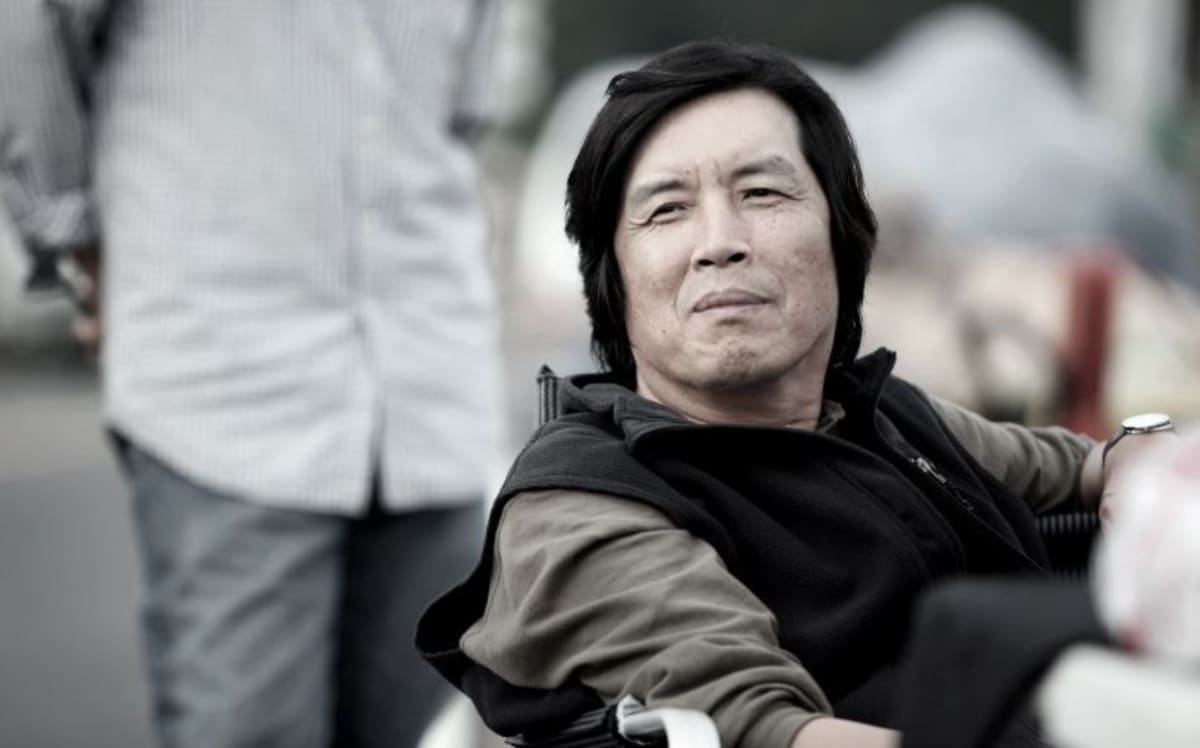
이창동 (Lee Chang-dong) makes films about people the world has failed. A disabled woman no one will acknowledge. A widow whose faith is challenged by something she can't forgive. An elderly woman beginning to lose her memory as she discovers what her 손자 (grandson) has done. A young man so economically marginal he has become invisible. His films are slow, formally severe, and emotionally unsparing — and they constitute one of the most coherent and morally serious bodies of work in world cinema.
He is less famous than 봉준호 and less visually spectacular than 박찬욱. He may be the greatest of the three.
Who He Is
이창동 was born in 1954 in 대구 (Daegu). He was a 국어 (literature) teacher and novelist before he turned to film — his first novel won a literary prize in 1987 — and the literary sensibility is fundamental to his filmmaking. His films feel written: every detail is weight-bearing, every silence is meaningful, every image is doing more work than it appears to be.
He served as Korea's 문화관광부 장관 (Minister of Culture and Tourism) from 2003 to 2004 — a role that gives him a specific position in Korean cultural life that most filmmakers don't have.
He has made six films in twenty-five years. Six films. Each one is essential.
The Films
초록 물고기 (Green Fish, 1997)
Debut
A young man returns from 군 복무 (military service) to a 서울 (Seoul) suburb that has been transformed by development and finds himself drawn into the criminal underworld. 초록 물고기 establishes the 이창동 territory: a specific Korean social landscape, a protagonist who doesn't fit into the systems surrounding him, violence as consequence rather than spectacle.
Not widely available internationally, but the foundation of the filmography.
박하사탕 (Peppermint Candy, 2000)
The formal statement
A man walks into a railway tunnel in front of an oncoming train. The film then runs backward — each chapter further into the past — showing how a man who was once capable of joy became the person who ends his own life. The final image is a young man at a picnic, in springtime, the future ahead of him.
박하사탕 is one of Korean cinema's most formally ambitious films. The film encompasses the 광주항쟁 (Gwangju Uprising), the 군대 (military), 경찰 폭력 (police violence), economic change, and one man's dissolution across Korean history's most turbulent decades.
Tip — 박하사탕 역순 구조: The film announces its backward structure at the opening — you know where you're going, which is toward innocence, and the journey is about understanding what was lost and how. This isn't a spoiler; it's the mechanism. The final scene is devastating because you've watched the whole film knowing it's coming.
오아시스 (Oasis, 2002)
The provocation
An ex-convict pursues a relationship with a woman with 뇌성마비 (cerebral palsy) who is marginalized by her own family. 오아시스 is the most directly uncomfortable film in the 이창동 catalog — the central relationship resists easy interpretation, and the film gives you nothing to hold onto except the relationship itself.
문소리 (Moon So-ri)'s performance won Best Actress at 베니스 국제영화제 (Venice Film Festival). The film examines what it means to be invisible — truly socially invisible — and the specific violence of that invisibility.
밀양 (Secret Sunshine, 2007)
The faith film
A widow moves to the small city of 밀양 (Miryang, "secret sunshine") with her young son. A terrible thing happens. She turns to Christianity for consolation. Something then happens that challenges whether the consolation Christianity offered was real.
밀양 takes faith seriously enough to be honest about its limits. 전도연 (Jeon Do-yeon)'s performance won Best Actress at 칸 영화제 (Cannes Film Festival).
The film's central argument — about who has the right to forgive, and whether forgiveness obtained through conversion is genuine — is one of the most serious engagements with theological questions in contemporary cinema.
시 (Poetry, 2010)
The masterwork
A woman in her sixties, beginning to show signs of 알츠하이머 (Alzheimer's), takes a 시 창작 (poetry writing) class. She is trying to learn to see beauty. Simultaneously, she learns that her teenage 손자 participated in the rape of a classmate who subsequently killed herself.
시 is built on an unbearable juxtaposition: a woman opening herself to beauty while confronting her proximity to an act of total moral failure. The final poem, which closes the film, is delivered from the perspective of the victim. It is one of cinema's most beautiful endings and one of its most devastating.
Won the Palme d'Or for Best Screenplay at 칸 영화제.
버닝 (Burning, 2018)
The international breakthrough
Based loosely on a 무라카미 하루키 (Haruki Murakami) short story. A young delivery worker in contemporary 한국 meets an old acquaintance who returns from a trip abroad with a mysterious wealthy friend. The wealthy friend casually mentions that he burns 비닐하우스 (greenhouses). The story becomes a paranoid mystery, but it's ultimately about who becomes invisible in contemporary Korea — who the economy has made so marginal that their disappearance goes unnoticed.
버닝 is 이창동's most accessible film and his most globally recognized. Shortlisted for the Academy Award for Best International Film. The ending is ambiguous in ways the film has earned.
The Formal Approach
Long takes, natural light. His scenes are filmed with patience — the camera holds, waits, allows silence. The effect is to make you feel time passing the way the characters feel it.
소리 디자인 (sound design) over score. 이창동 uses music minimally. Ambient sound — traffic, wind, the natural world — carries the emotional weight that most directors assign to score.
Narrative ellipsis. Things happen between scenes in 이창동 films. He cuts away before violence, before revelation, before resolution — making the viewer do the imaginative work of what happened in the gap.
The Consistent Preoccupations
The socially invisible. Every 이창동 film centers on people the world doesn't see — the 장애인 (disabled), the economically marginal, the 노인 (elderly), the poor. The films' argument, sustained across thirty years of work, is that this invisibility is a form of violence.
Beauty as ethical practice. 시 makes this explicit: the ability to see beauty is not separate from moral attention — it's the same capacity.
Key Works at a Glance
Film | Year | Award | Why it matters |
|---|---|---|---|
박하사탕 | 2000 | — | Formal masterwork; Korean history in reverse |
오아시스 | 2002 | 베니스 Best Actress (문소리) | Most challenging; most direct |
밀양 | 2007 | 칸 Best Actress (전도연) | Faith, grief, forgiveness |
시 | 2010 | 칸 Best Screenplay | Most complete film |
버닝 | 2018 | — | Most accessible; international recognition |
Comments
Inappropriate comments may be deleted.
Log in to leave a comment.
No comments yet. Be the first!